Apply Now Programmes Virtual Tour CT-SET 2026 Ph.D
Admissions
Open 2026-27
Apply now
Apply Now

Masters of Pharmacy (Pharmaceutics/Pharmacology)

program-details

M.Pharm is a specialized program that offers advanced knowledge in various branches of pharmaceutical sciences. The program includes intensive research, project work, and skill development to prepare students for high-level positions in research, academia, and industry.

Industry Immersion

  • Research collaborations with pharmaceutical companies.
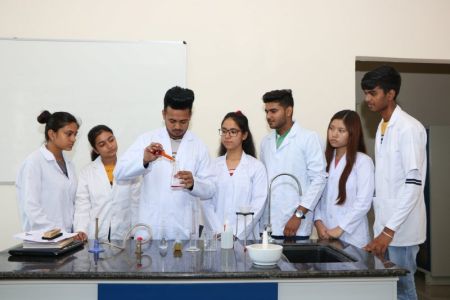
  • Laboratory-based experiments and projects.
  • Internship opportunities in research institutions.

eligibility criteria

1. B. Pharm Degree examination of an Indian university established by law in India from an institution approved by Pharmacy Council of India and has scored not less than 55 % of the maximum marks (aggregate of 4 years of B.Pharm). 
2. For candidates having not less than 5 years professional experience, after passing B. Pharm course, there shall be a relaxation in pass percentage from 55% to 50% for admission to M.Pharm programme

Admission criteria

  • Entrance exam or merit-based selection.
  • Personal interview (if applicable).

Duration

2 Years

Curriculum

1ST SEMESTER SUBJECTS

PHARMACEUTICS

Covers advanced analytical techniques used for the identification, characterization, purity assessment, and quantitative evaluation of pharmaceutical substances and formulations. Emphasis is given to spectroscopic, chromatographic, thermal, and other instrumental methods.

Covers the principles, design, formulation, evaluation, and applications of conventional and advanced drug delivery systems. Emphasis is placed on improving drug efficacy, safety, stability, bioavailability, and therapeutic performance.

Provides advanced knowledge of formulation development, dosage-form design, manufacturing, and evaluation of modern pharmaceutical products. Emphasis is placed on formulation optimization, novel excipients, process development, and quality considerations.

Introduces regulatory principles and requirements governing the development, manufacturing, quality control, and marketing of pharmaceutical products. Covers regulatory guidelines, documentation, drug approval processes, GMP, and regulatory submissions.

Provides practical training in the formulation, preparation, optimization, and evaluation of conventional and advanced pharmaceutical dosage forms. Students develop skills in experimental design, formulation characterization, and interpretation of pharmaceutical data.

Develops students’ skills in literature review, scientific writing, critical evaluation, and scientific communication. Students study emerging topics in pharmaceutics and present their findings through seminars or structured assignments.
PHARMACOLOGY

Covers advanced analytical techniques used for the identification, characterization, and quantitative analysis of drugs and pharmaceutical substances. Emphasis is placed on spectroscopic, chromatographic, thermal, and other modern instrumental methods.

Provides advanced knowledge of the mechanisms of drug action, pharmacological effects, therapeutic uses, and adverse effects of drugs. Emphasis is placed on major drug classes acting on the autonomic, central, and peripheral nervous systems.

Covers principles and methodologies used for pharmacological and toxicological evaluation of drugs and bioactive compounds. Emphasis is placed on experimental models, screening procedures, dose selection, safety assessment, and interpretation of pharmacological responses.

Explores cellular and molecular mechanisms underlying drug action and biological responses. Covers receptors, signal transduction pathways, second messengers, gene expression, molecular targets, and contemporary approaches in molecular pharmacology.

Provides hands-on training in experimental pharmacology, including drug screening, dose–response studies, and evaluation of pharmacological effects using appropriate experimental models. Students develop skills in experimental design, data analysis, and interpretation.

Develops students’ skills in scientific literature review, critical analysis, scientific writing, and oral presentation. Students explore recent advances and emerging research areas in pharmacology and related disciplines.

2ND SEMESTER SUBJECTS

PHARMACEUTICS

Covers the principles and applications of nanotechnology and molecular approaches in pharmaceutical drug delivery. Emphasis is placed on nanocarriers, targeted delivery systems, stimuli-responsive systems, and strategies for improving therapeutic efficacy.

Provides advanced understanding of drug absorption, distribution, metabolism, excretion, bioavailability, and bioequivalence. Covers pharmacokinetic models, drug disposition, dose optimization, and factors influencing drug exposure and therapeutic response.

Introduces computational and modeling approaches used in the design, optimization, and prediction of drug delivery systems. Covers formulation modeling, simulation, statistical optimization, molecular modeling, and data-driven approaches in pharmaceutical development.

Covers the principles of formulation, development, evaluation, and quality control of cosmetic and cosmeceutical products. Emphasis is placed on active ingredients, advanced delivery systems, product safety, stability, efficacy, and regulatory considerations.

Provides hands-on training in advanced formulation development and evaluation of pharmaceutical and novel drug delivery systems. Students apply experimental and analytical techniques for formulation optimization and characterization.

Enables students to critically review recent advances in pharmaceutics, novel drug delivery, nanotechnology, and pharmaceutical formulation. The activity develops literature-search, scientific writing, presentation, and critical-thinking skills.
PHARMACOLOGY

Provides advanced understanding of the pharmacology of drugs acting on major organ systems, including cardiovascular, endocrine, gastrointestinal, respiratory, and immune systems. Emphasis is placed on mechanisms of action, therapeutic applications, drug interactions, and adverse effects.

Covers advanced in vitro and in vivo approaches for pharmacological screening and toxicity evaluation of drug candidates. Emphasis is placed on specialized disease models, safety pharmacology, toxicological endpoints, and interpretation of experimental findings.

Introduces the fundamental concepts and strategies involved in modern drug discovery and development. Covers target identification and validation, lead discovery, lead optimization, preclinical evaluation, and emerging approaches such as computational and biologics-based drug discovery.

Covers the principles, design, conduct, and ethical aspects of clinical research and clinical trials. Introduces pharmacovigilance systems, adverse drug reaction monitoring, signal detection, risk assessment, and benefit–risk evaluation of medicines.

Provides practical training in advanced pharmacological and toxicological screening techniques and experimental models. Students develop competency in experimental planning, data analysis, statistical evaluation, and interpretation of pharmacological and safety outcomes.

Enables students to critically evaluate recent scientific literature and emerging developments in pharmacology, drug discovery, clinical research, and pharmacovigilance. The activity strengthens scientific writing, critical thinking, and presentation skills.

3RD SEMESTER SUBJECTS

PHARMACEUTICS

Introduces the principles of scientific research design, literature review, hypothesis formulation, research ethics, data collection, and experimental planning. Covers appropriate statistical methods for analysis, interpretation, and presentation of pharmaceutical research data.

Provides a structured platform for critical appraisal and discussion of recent research publications in pharmaceutics and allied pharmaceutical sciences. Students evaluate research objectives, methodology, results, statistical approaches, limitations, and scientific significance.

Enables students to formulate and present a research proposal based on a defined pharmaceutical research problem. Emphasis is placed on scientific rationale, objectives, methodology, expected outcomes, and feasibility of the proposed research.

Involves systematic execution of the approved research project under faculty supervision. Students apply appropriate formulation, analytical, experimental, and statistical techniques to generate, analyze, and interpret research findings.
PHARMACOLOGY

Introduces the principles of scientific research design, literature review, hypothesis formulation, research ethics, data collection, and experimental planning. Covers appropriate statistical methods for analysis, interpretation, and presentation of pharmaceutical research data.

Provides a structured platform for critical appraisal and discussion of recent research publications in pharmaceutics and allied pharmaceutical sciences. Students evaluate research objectives, methodology, results, statistical approaches, limitations, and scientific significance.

Enables students to formulate and present a research proposal based on a defined pharmaceutical research problem. Emphasis is placed on scientific rationale, objectives, methodology, expected outcomes, and feasibility of the proposed research.

Involves systematic execution of the approved research project under faculty supervision. Students apply appropriate formulation, analytical, experimental, and statistical techniques to generate, analyze, and interpret research findings.

4TH SEMESTER SUBJECTS

PHARMACEUTICS

Focuses on critical evaluation of recent and relevant research articles in pharmaceutics, drug delivery, formulation science, and allied areas. Students develop skills in scientific interpretation, critical thinking, and discussion of contemporary research findings.

Provides a platform for presenting and discussing research progress, experimental findings, and scientific interpretations. Students develop skills in scientific communication, data interpretation, research defense, and addressing research-related questions.

Involves completion of the research project, analysis and interpretation of results, and preparation of the dissertation. Students present their research outcomes through a colloquium and demonstrate their ability to communicate and defend scientific findings effectively.
PHARMACOLOGY

Focuses on critical evaluation of recent and relevant research articles in pharmaceutics, drug delivery, formulation science, and allied areas. Students develop skills in scientific interpretation, critical thinking, and discussion of contemporary research findings.

Provides a platform for presenting and discussing research progress, experimental findings, and scientific interpretations. Students develop skills in scientific communication, data interpretation, research defense, and addressing research-related questions.

Involves completion of the research project, analysis and interpretation of results, and preparation of the dissertation. Students present their research outcomes through a colloquium and demonstrate their ability to communicate and defend scientific findings effectively.

fees

Details

Amount

Programme Fees (per Semester)

83000

Examination Fees

3000

International Fees (per Year)

$5000

Programme Outcomes

  • Able to utilize basic knowledge of pharmaceutical sciences associated with the profession of pharmacy, along with understanding of behavioral, social, administrative, good manufacturing practices related to pharmaceuticals.
  • Able to appreciate planning abilities including effective demonstration with context to pharmacodynamics and regulatory aspects of drugs and critical analysis of drug use policy to promote drug discovery, its metabolism, and approval for safe use of pharmaceuticals.
  • Able to apply cognitive skills, investigative approach, creative thinking to evaluate and interpret data related to preclinical and clinical testing of pharmaceuticals and drugs, laboratory investigations, pharmaceutical care and practices. 
  • Able to perform and engage professionally and as multidisciplinary team member at different areas of professional practice. Understand and consider motivation issues, leadership and team-building while fulfilment of practice, professional and societal responsibilities.
  • Able to analyze the problem to address issues at professional care practice along with understanding, analysis and communicating the value of their professional roles in society. Apply ethical principles in professional and social contexts. Using ethical frameworks while making decisions and take responsibility for the outcomes associated with the decisions.
  • Able to converse, write, interpret and interact effectively and scientifically for efficient professional practice. Communicate effectively with the pharmacy community and with society at large, make effective documentation contributing in manufacturing, quality control and quality assurance of pharmaceuticals
  • Able to apply knowledge on ethical practices, moral integrity and human values in personal and professional endeavors. Apply reasoning according to the contextual knowledge to assess societal, health, safety and legal issues related to drug discovery and the consequent responsibilities relevant to the professional pharmacy practice.
  • Able to embark upon lifelong professional learning to adapt to ever changing professional and health care scenario with context to clinical research and pharmacovigilance. Able to assimilate modern approaches to quality professional practice in the field of pharmacy.
  • Understand the impact of the professional pharmacy solutions in societal and environmental contexts. 
  • Able to serve society in hospitals and pharmaceutical industry as pharmacologist, comprehending the profound knowledge of advanced pharmacology and biostatical analysis.
  • Able to distinguish professional impact within local, national and global perspectives and can assess societal, health and safety issues contributing in manufacturing, quality control and quality assurance of pharmaceuticals.

Programme Specific Outcomes

  • Understanding and applying basic knowledge gained in pharmaceutical analysis, cellular and molecular pharmacology, advanced pharmacology and computer technology in pharmacy profession along with technological innovations in the field of pharmacy.
  • Develop required skills in preclinical testing of drugs and natural biomarkers as well as about their mechanism of action of drugs in human.
  • Significance of communication skills, leadership qualities and other required soft skills for professional achievement.
  • Understanding and communicate ethical values of the research and development related to pharmaceuticals with commitment to societal welfare.
  • Capabilities for value added services and system relating to pharmacology and toxicology of drugs with focus on safe use of pharmaceuticals. 
  • To develop a sense of professional responsibility and be able to master, generate, interpret, and disseminate the therapeutic knowledge of pharmaceutical care.
  • Acquire knowledge in the field of synthetic, natural sources of drugs and biological products as well as their formulation and evaluation, including their regulatory requirements.
  • Enable graduate to stream a lifelong career of personal and practicing pharmacy professional with ethical codes and self-esteem.

Salient Features

  • Programme knowledge and its application: To empower graduates with knowledge and practice of pharmaceutical sciences across the discipline through ambience of motivation that could impel excellence and career growth in pharmacy profession related to pre-clinical testing of active pharmaceutical ingredients and natural biomarkers.
  • Professional skills and their application: To enhance practical-based skills to meet professional challenges specifically related to preclinical testing of drugs, pharmaceutical industry and safe use of drugs in hospital pharmacy.
  • Engagement with the needs of society: To foster graduates to leadership and entrepreneurship qualities to serve as qualified personnel in pharmacology research-based work in pharmaceutical industry and health care system.
  • Lifelong learning: To spur graduates in interpersonal skills, to value professional integrity and pharmacy ethics and accustomed to lifelong learning.
  • Social accountability and responsibility: To appreciate local and global needs of health care and pharmacy profession with specific focus towards skills and will to make and serve quality pharmaceuticals. 
  • Pharmacy practice: As a qualified pharmacist, using the fundamentals of pharmaceutical sciences for ethical practice in hospital pharmacy, retail pharmacy, wholesale pharmacy and pharmaceutical industry. 

curriculum

Infrastructure