Apply Now Programmes Virtual Tour CT-SET 2026 Ph.D
Admissions
Open 2026-27
Apply now
Apply Now

Diploma in Fashion Design

program-details

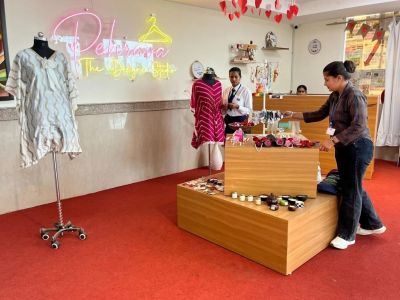
A Diploma in Fashion Design is a specialized program that focuses on developing the creative and technical skills necessary for a career in the fashion industry. The curriculum typically covers design principles, garment construction, textiles, fashion illustration, and pattern making. Students gain hands-on experience through practical projects and may participate in fashion shows. This diploma provides a solid foundation for individuals aspiring to work in various roles within the fashion design and apparel industry, emphasizing both artistic expression and practical design skills. 

Industry Immersion

The industry immersion component of a Diploma in Fashion Design involves practical experiences within the fashion industry. This may include internships, workshops, and collaborations with fashion houses or designers. Students get hands-on exposure to the entire fashion design process, from concept creation to garment production. They may participate in fashion events, work on real-world projects, and engage with industry professionals. This immersion helps students apply their theoretical knowledge in a practical context, understand industry trends, and develop essential skills for success in the dynamic field of fashion design. It serves as a bridge between classroom learning and the professional demands of the fashion industry.

eligibility criteria

10+2 or equivalent in any stream with English as a compulsory subject from a recognized board and having atleast 50% marks

Admission criteria

Merit in CT-SET, subject to fulfilling eligibility criteria.

Duration

2 Years

Curriculum

1ST SEMESTER SUBJECTS

Introduces the fundamental elements and principles of design, composition, colour theory, colour psychology, and motifs. Students develop aesthetic awareness and learn to create visually balanced design compositions.

Provides practical experience in drawing, rendering, textures, patterns, colour schemes, and motif development. Students apply design principles to create aesthetic and creative visual compositions.

Develops foundational fashion drawing skills through shading, freehand sketching, perspective, repeat patterns, and silhouette studies. Students learn to visualize and communicate creative fashion concepts through illustration.

Explores the origin of clothing, fashion terminology, fashion cycles, theories, psychology, and sociological aspects of clothing. Students gain an understanding of fashion movements, consumer behaviour, designers, and fashion forecasting.

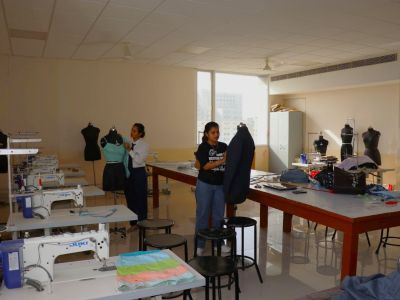
Introduces essential hand and machine stitches, seams, fabric manipulation, necklines, plackets, and garment finishing techniques. Students develop practical skills for constructing basic garments and accessories.

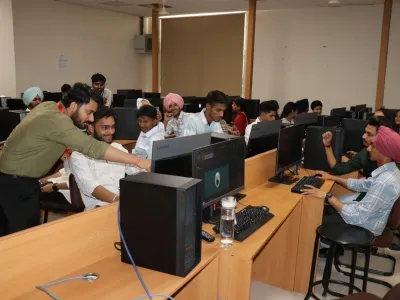
Introduces computer-aided design applications for fashion and apparel, including digital drawing, motifs, patterns, and design composition. Students develop foundational skills in using digital tools to conceptualize and communicate fashion designs.

Fiber and Yarn Science
Provides knowledge of natural and synthetic textile fibres, their properties, identification, manufacturing, and applications. Students also study yarn classification, production, characteristics, blends, and yarn-related concepts.

Textile Science and Care
Covers textile fibres, yarns, fabric construction, finishes, laundering, stain removal, care labels, and storage practices. The course develops an understanding of textile behaviour and appropriate care for durability and sustainability.

Explores environmental systems, ecosystems, biodiversity, natural resources, and the interdependence between humans and nature. The course develops awareness of environmental policies, conservation, waste management, water management, sanitation, and sustainable practices. Students learn to analyse environmental challenges and develop practical solutions for local and global sustainability.

Develops students’ English communication skills through listening, speaking, reading, and writing. The course focuses on grammar, vocabulary, pronunciation, presentations, audience awareness, body language, and effective use of audio-visual aids. It helps students communicate confidently and appropriately in academic, professional, and everyday situations.

This course introduces the fundamental principles, functions, and processes of management, including planning, organizing, decision-making, leadership, and motivation. It develops students’ ability to analyze organizational situations and apply effective management strategies to address contemporary challenges and improve organizational performance.

2ND SEMESTER SUBJECTS

Provides an overview of the textile and apparel industry, its organizational structure, departments, quality control, and global trade. Students explore industry prospects, government incentives, export-import dynamics, and emerging opportunities.

Traces the evolution of Indian costumes, jewellery, hairstyles, and footwear from ancient civilizations through the British Raj. Students explore regional diversity and the cultural, social, and historical significance of Indian dress.

Develops advanced digital fashion design skills through garment features, accessories, flat sketches, Indian wear, and digital design applications. Students gain practical experience in translating fashion concepts into precise digital formats.

Introduces embroidery, surface manipulation, embellishment, resist dyeing, and fabric printing techniques. Students develop creative skills for adding decorative and value-enhancing details to textile surfaces.

Expands fashion illustration skills through garment features, garment types, accessories, hairstyles, and flat sketching. Students learn to develop complete fashion looks for different garments, themes, and occasions.

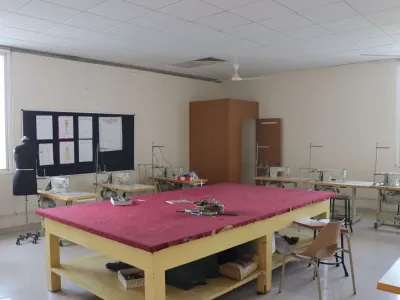
Introduces flat pattern development, dart manipulation, sleeves, collars, yokes, plackets, skirts, and basic garment construction. Students gain practical skills in developing accurate patterns and translating them into wearable garments.

Students will develop a fashion design project that showcases the knowledge and creative skills acquired throughout the semester. The project will demonstrate their ability to apply fashion concepts, design techniques, and practical skills in a creative and professional manner.

Fabric Construction-I (Weaving)
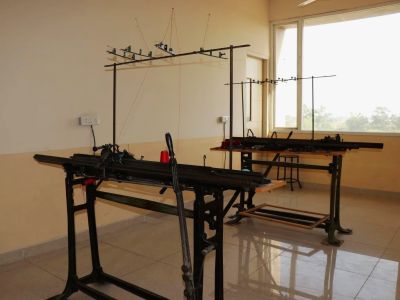
Explores major fabric construction methods, including weaving, knitting, non-wovens, looms, and different weave structures. Students learn to understand and analyse fabric construction and its influence on performance and appearance.

Apparel Production Management
Introduces apparel production systems, planning and scheduling, costing, budgeting, manufacturing, and quality control. Students also explore automation and CAD/CAM technologies for improving production efficiency and resource management.

Fabric Construction- I (Lab)
Provides hands-on experience in preparing samples of plain, twill, satin, and sateen weaves and other fabric construction techniques. Students apply construction principles through practical sampling and product development.

Apparel Production Management- (Lab)
Introduces apparel production systems, planning and scheduling, costing, budgeting, manufacturing, and quality control. Students also explore automation and CAD/CAM technologies for improving production efficiency and resource management.

Develops students’ understanding of universal human values, self-awareness, compassion, empathy, truth, non-violence, and moral responsibility. The course encourages personal transformation through selfless service, ethical decision-making, and reflection. Students explore sacrifice, righteousness, renunciation, and simplicity to develop responsible attitudes, meaningful relationships, and inner harmony in contemporary life.

Enhances advanced English communication skills through grammar, note-making, summarization, paraphrasing, vocabulary development, and coherent discourse. Students develop the ability to organize and present ideas effectively in both written and spoken forms. The course strengthens language proficiency for academic, professional, and real-world communication at intermediate to upper-intermediate levels.

Office Automation and Productivity Tools introduces students to essential digital tools used for professional documentation, data management, presentations, databases, and communication. The course develops practical skills in word processing, spreadsheets, presentation software, database management, internet tools, and email systems to enhance workplace productivity and efficiency.

This practical course develops students’ proficiency in using office automation tools such as Word, Excel, PowerPoint, and email applications for professional and academic tasks. It focuses on document creation, data management, presentations, communication, scheduling, and effective use of collaborative and cloud-based productivity tools.

fees

Details

Amount

Programme Fees (per Semester)

55000

Examination Fees

3000

International Fees (per Year)

Not Applicable

Fee Slab

Slab >=60% - 74.99% >=75% - 89.99% >=90% & Above
Fee ₹50000 ₹45000 ₹40000

Students can avail these slots depending on the marks they have scored. Each slot reflects a different academic range, helping students understand where they stand and what benefits they qualify for.

Infrastructure