Apply Now Programmes Virtual Tour CT-SET 2026 Ph.D
Admissions
Open 2026-27
Apply now
Apply Now

Bachelor of Arts (Hons.) in Journalism and Mass Communication (BAJMC)

program-details

The Bachelor of Arts (Hons.) in Journalism & Mass Communication is a future-ready undergraduate program designed to prepare students for the dynamic world of media, communication, and digital content. The curriculum blends classroom learning with hands-on training in news reporting, digital storytelling, advertising, public relations, photography, radio, television, filmmaking, and new-age media technologies.

Students graduate with strong communication skills, media ethics, technical expertise, and professional portfolios that prepare them for careers in corporate communication, broadcasting, entertainment, social media, and journalism.

Why Study BAJMC?

  • Learn from industry experts, media professionals, and experienced academicians.
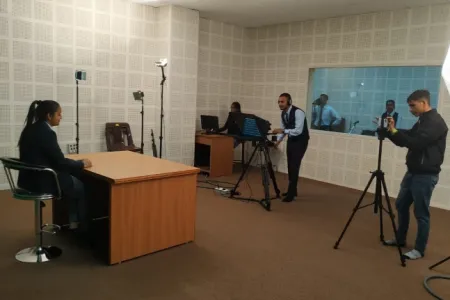
  • Practical training in newsrooms, TV studios, radio labs, and editing suites.
  • Opportunity to build your own YouTube channel, podcast, blog, or digital portfolio.
  • Strong focus on digital media, AI tools, social media strategy, and multimedia storytelling.
  • Flexible minors and open minors under the NEP 2020 framework.
  • Industry visits, internships, masterclasses, and real-world projects every semester.

Program Highlights

  1. Industry Immersion: Internships, newsroom simulations, TV and radio production, advertising campaigns, PR projects.
  2. State-of-the-Art Facilities: Radio & TV studio, photography lab, editing lab, multimedia lab.
  3. Skill-Based Curriculum: Digital marketing, mobile journalism, podcasting, scriptwriting, content creation, editing tools.
  4. International Exposure: Study abroad opportunities and workshops from global media faculty.
  5. Professional Portfolio: Students graduate with a curated portfolio (anchors’ reel, short films, ads, reports, articles, podcasts).

eligibility criteria

Passed 10+2 or equivalent in any stream with English as a compulsory subject from a recognized board with 45% marks

Admission criteria

  • Merit-based or Entrance Test (as per university policy).
  • Final admission through document verification & fee submission.

Duration

4 Years

Curriculum

1ST SEMESTER SUBJECTS

Meaning and definition of journalism, Nature and scope of journalism, Functions of journalism: Education, Entertainment, Interpretation, Role of journalism in society, Journalism as a profession

Meaning and definition of communication, Process of communication, Elements of communication, Types of communication

Meaning and concept of media, Meaning and structure of society, Relationship between media and society, Functions of media in society, Role of media in modern life

Meaning and evolution of podcasts, Types of podcasts: Interview podcasts, Storytelling podcasts, News podcasts, Educational podcasts, Role of podcasting in digital journalism,

An introductory elective course designed to strengthen students’ proficiency in English communication. The course focuses on developing listening, speaking, reading, and writing skills, along with vocabulary, grammar, pronunciation, and practical communication.

An introductory elective course designed to develop an entrepreneurial way of thinking among students. The course introduces students to creativity, innovation, opportunity identification, problem-solving, risk-taking, leadership, and decision-making.

An introductory elective course designed to develop the essential skills required for academic, professional, and workplace success. The course focuses on communication, teamwork, leadership, time management, problem-solving, decision-making, interpersonal skills, workplace etiquette, and professional behaviour.

Environmental Studies is an introductory elective course designed to develop awareness and understanding of the environment, natural resources, ecosystems, biodiversity, pollution, climate change, and sustainable development.

Health, Fitness and Sports Nutrition is an introductory elective course designed to develop awareness about physical health, fitness, nutrition, exercise, and healthy lifestyle practices.

2ND SEMESTER SUBJECTS

Develops skills in camera handling, composition, lighting, and visual storytelling techniques.

Explores how images, symbols, colours, and design communicate ideas effectively.

Introduces ethical principles, responsibilities, values, and professional standards governing media practices.

Develops practical skills in creating engaging digital content for diverse media platforms.

Provides practical workplace experience, professional exposure, industry skills, and career-oriented learning opportunities.

Enhances advanced communication, writing, comprehension, vocabulary, and professional English language skills.

Develops innovation, opportunity recognition, entrepreneurial thinking, and practical business problem-solving abilities.

Develops leadership, teamwork, decision-making, planning, coordination, and effective management abilities.

Promotes ethical living, harmony, responsibility, empathy, and values-based personal and professional development.

Develops awareness of immunity, nutrition, fitness, wellness practices, and healthy lifestyle choices.

3RD SEMESTER SUBJECTS

Develops practical skills in scripting, recording, editing, broadcasting, and radio programme production.

Explores communication theories, models, processes, applications, and contemporary mass media practices.

Introduces print media elements, design principles, layout, typography, headlines, and publication.

Develops practical camera skills, exposure, composition, focusing, lighting, and photographic techniques.

Develops skills in integrating text, images, audio, video, graphics, and interactive storytelling.

Strengthens advanced English communication, writing, comprehension, vocabulary, and professional language skills.

Develops effective verbal, non-verbal, interpersonal, presentation, and professional communication abilities.

Develops entrepreneurial leadership, innovation, business planning, opportunity assessment, and venture development skills.

Provides essential knowledge and practical skills for responding safely to common emergencies.

4TH SEMESTER SUBJECTS

Introduces television scripting, camera operations, production planning, direction, editing, and programme development.

Introduces advertising concepts, creativity, campaigns, media planning, branding, and audience communication strategies.

Explores PR principles, communication strategies, media relations, reputation management, and stakeholder engagement.

Provides practical industry exposure, workplace experience, professional skills, and application of classroom learning.

Develops practical skills in cinematography, lighting, sound, shooting, editing, and audiovisual production.

Enhances advanced English proficiency, professional communication, writing, presentation, and critical language skills.

Develops awareness and practical strategies for managing stress, emotions, resilience, and overall wellbeing.

5TH SEMESTER SUBJECTS

Examines media representation, gender issues, equality, diversity, rights, and social justice.

Covers media regulations, legal frameworks, ethical principles, responsibilities, and professional journalistic conduct.

Develops practical knowledge of newspaper planning, editing, page design, production, and publication processes.

Develops practical skills in documentary research, scripting, filming, interviewing, editing, and storytelling.

Explores digital journalism, social media, online platforms, mobile reporting, and emerging media technologies.

Develops advanced entrepreneurial thinking, innovation, leadership, business planning, and opportunity management skills.

Develops advanced English proficiency, professional writing, communication, presentation, and critical language skills.

6TH SEMESTER SUBJECTS

Explores journalism’s role in development, social change, public awareness, and community empowerment.

Develops skills in combining text, photographs, audio, video, graphics, and interactive elements.

Introduces reporting, scripting, interviewing, news production, broadcasting, and presentation for radio and television.

Provides practical industry exposure, workplace experience, professional skills, and application of classroom learning.

Develops practical skills in news reporting, interviewing, script preparation, presentation, and anchoring.

Develops practical skills for creating engaging, creative, and platform-specific digital media content.

Strengthens advanced English communication, professional writing, presentation, comprehension, and workplace language skills.

7TH SEMESTER SUBJECTS

Explores strategic planning, audience analysis, media selection, branding, and effective communication approaches.

Develops advanced reporting, investigative techniques, critical analysis, digital journalism, and professional news production.

Introduces research methods, data collection, analysis, interpretation, and research applications in media studies.

Develops skills in campaign research, objective setting, audience targeting, message design, and evaluation.

Develops practical skills in story development, scripting, dialogue, characterisation, formatting, and visual storytelling.

Develops advanced entrepreneurial thinking, strategic innovation, leadership, opportunity identification, and venture development skills.

Enables students to apply knowledge and skills through independent, research-based, practical media projects.

8TH SEMESTER SUBJECTS

Enables students to complete an advanced independent project demonstrating research, creativity, and professional skills.

Provides practical industry exposure, workplace experience, professional skills, and application of classroom learning.

fees

Details

Amount

Programme Fees (per Semester)

55000

Examination Fees

3000

International Fees (per Year)

$2800

Fee Slab

Slab >=60% - 74.99% >=75% - 89.99% >=90% & Above
Fee ₹50000 ₹45000 ₹40000

Students can avail these slots depending on the marks they have scored. Each slot reflects a different academic range, helping students understand where they stand and what benefits they qualify for.

Programme Outcomes

Upon completion, students will be able to:

  • Produce high-quality news stories, multimedia content, and communication campaigns.
  • Apply media ethics, research skills, and critical thinking.
  • Use modern digital tools, editing software, and social media analytics.
  • Work confidently in media organizations, corporate communication teams, and creative
    agencies.
  • Pursue higher studies, government exams, or global master’s programs.

curriculum

Infrastructure